





Swayambhunath Temple Guide: What to See and Do in Kathmandu
Swayambhunath Temple (Monkey Temple) is one of the oldest and most important sites in Nepal. It is a symbol of peace, wisdom, and spiritual legacy and sits on a hill in Kathmandu. It attracts thousands of people every year, and only few can understand its rich meanings, symbols, and sacred structures.
That’s why we made this easy-to-follow and helpful Swayambhunath temple guide to assist you learn more about the temple. There is a narrative worth learning in every part of Swayambhunath, from the famous Buddha Eyes to the spinning prayer wheels.
This blog tells you what to see, what it symbolizes, and how to be kind while you’re there. You will know by the end why Swayambhunath Temple is more than just a place for tourists.
Table of Contents
History and Culture of Swayambhunath Temple
Swayambhunath temple is one of the oldest spiritual sites in Nepal, with a history that goes back more than 2000 years. The name “Swayambhunath” means “self-sprung” in Sanskrit, which fits with the story of how it came to be.
Old sources say that the Kathmandu Valley used to be a huge lake. From its depths, a heavenly lotus flowered, and from that sacred lotus sprang the hill where the temple currently stands. Around 460 AD, King Manadeva built the first stupa. However, archaeological evidence shows that religious activity started hundreds of years before.
What Makes It Special:
- A special harmony between Hindu and Buddhist traditions
- Religious practice that has been going on for more than 1,500 years
- Important to both Tibetan and local Buddhist groups
- Lived through many earthquakes and upheavals in history
This religious harmony reflects Nepal’s inclusive spiritual culture, where different faiths coexist peacefully within the same sacred space.
Recommended Package: Cultural Tour in Nepal
The Stupa and Its Secrets
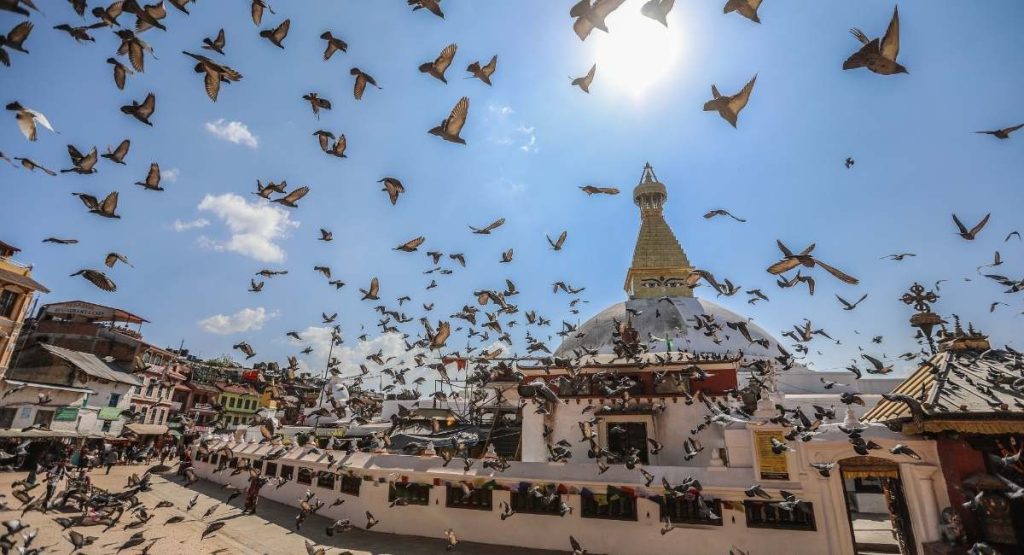
The main stupa is a masterpiece of Buddhist architecture, each element rich with symbolism representing the path to enlightenment.
Architectural Elements:
- Square Base: Represents the earth element
- White Dome: Symbolizes water and the womb of creation
- Thirteen Levels: Steps leading to enlightenment
- Golden Spire: Represents fire element
- Umbrella Top: Embodies air and space elements
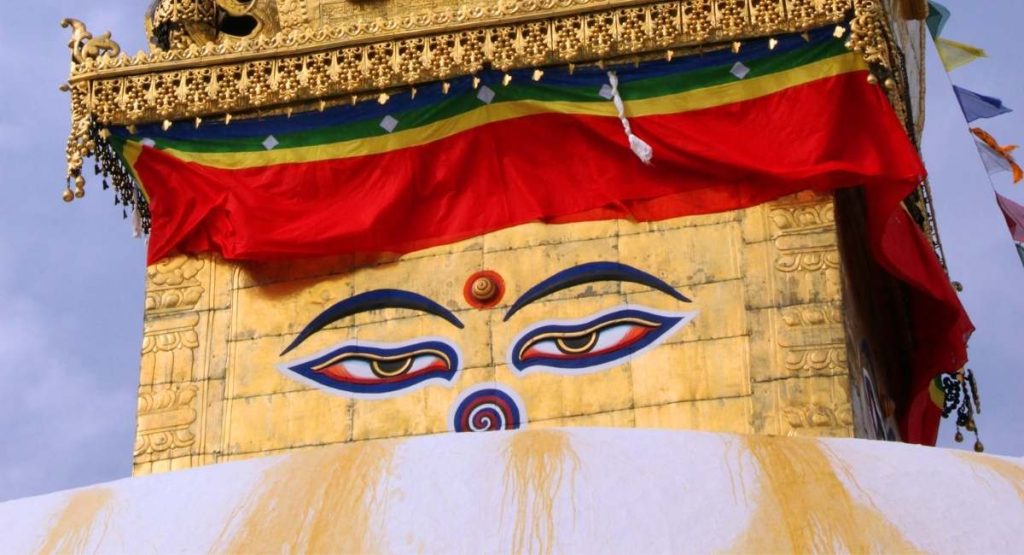
The famous Buddha eyes painted on the golden cube are the temple’s most recognizable feature. These “wisdom eyes” represent Buddha’s all-seeing compassion, while the curly symbol between them is the Nepali number “1,” symbolizing unity and the singular path to enlightenment.
Hidden within the stupa are countless sacred relics and offerings placed over centuries, making it one of Buddhism’s most sacred repositories.
The Harmony of Elements
Swayambhunath Temple is like nature and spirit coming together. The temple brings all five natural elements into one sacred space:
- Earth: Stone steps and foundations
- Water: Ritual washing areas and fountains
- Fire: Butter lamps and incense offerings
- Air: Prayer flags fluttering in the breeze
- Space: Open areas around the stupa
That’s why being at the Swayambhunath monkey temple feels so magical. Your body and mind feel calm and connected.
This Swayambhunath Temple Guide encourages you to stop, take a deep breath, and notice how everything around you flows in harmony. Nature, people, sounds, and spirit all become one. That’s the true heart of the Swayambhunath temple in Nepal.
For those on a student’s tour in Nepal, this site offers more than just sightseeing—it’s a peaceful space to reflect, learn, and experience the deep spiritual connection between people and nature.
Prayer Wheels and Mantras
As you walk around the stupa, you’ll see prayer wheels lined up in rows.
- Spin them clockwise while saying “Om Mani Padme Hum.”
- Each spin is like saying a prayer.
- The inside of the wheel has thousands of mantras written on paper.
The Swayambhunath Temple Guide reminds you: don’t rush this part. Feel the wheels under your hand. Let the sound of the bells guide your steps. Many people believe that spinning the wheels at the Swayambhunath temple in Kathmandu brings good luck and kindness.
This peaceful and meaningful activity is suitable for family tour experiences, where every age group can connect with the temple’s calm and spiritual energy.
Whether it’s your first time or not, the Swayambhunath Monkey Temple always welcomes your prayers.
Buddhist Temples, Shrines, and Chaityas
There are many important buildings at Swayambhunath Temple besides the great stupa, each with its own story and purpose.
Key Temples to Visit:
- Anantapur Temple: Dedicated to the Buddha of infinite light
- Shantipur Temple: Contains a mysterious meditation chamber
- Tibetan Monastery: Features traditional monk debates
- Various Chaityas: Smaller stupas serve as meditation points
Each shrine at the Swayambhunath temple in Nepal has a story. That’s why this Swayambhunath Temple Guide recommends slowing down and taking your time.
Butter Lamps and Peaceful Offerings
One of the calmest spots in Swayambhunath Temple is where people light butter lamps.
- Butter lamps stand for light and wisdom.
- They help clear away bad thoughts and bring peace.
- People offer flowers, food, or coins with prayers.
You can light a lamp at the Swayambhunath temple in Kathmandu and make a wish. It’s a quiet, beautiful moment you won’t forget.
If you’re on a Nepal tour, this peaceful ritual is a must-experience. It adds a deep spiritual touch to your journey, making it more than just sightseeing.
The Swayambhunath Temple Guide reminds us that even small actions, like lighting a lamp, connect us to something bigger. That’s what makes the Nepal Swayambhunath Temple so meaningful.
Buddha Eyes and Wisdom Eyes
The stupa’s piercing Buddha eyes are the most well-known thing about Swayambhunath. These “wisdom eyes” look like they are practically three-dimensional and seem to follow you as you walk around the stupa.
Symbolic Meaning:
- The Eyes: All-seeing compassion of Buddha
- Third Eye: Wisdom that sees beyond the physical world
- Curly Symbol: Nepali number “1” representing unity
- Overall Design: Constant reminder of Buddha’s presence
These eyes have watched over the Kathmandu Valley for centuries, serving as a beacon of compassion and wisdom.
This Swayambhunath Temple Guide helps you see them not just as decoration, but as symbols of peace, awareness, and calm. Next time you’re at the Swayambhunath temple in Kathmandu, look into the Buddha Eyes and smile.
The Monkeys of Swayambhunath
Rhesus macaques that have lived here for generations are the sacred monkeys that give the temple its nickname. People say that they are the children of the lice that lived in Bodhisattva Manjushri’s hair. People think of the monkeys as sacred guardians, which adds a nice natural touch to your spiritual trip.
This Swayambhunath Temple Guide suggests keeping your snacks packed and your phone ready—you might just catch a monkey doing something silly! Even though they’re cute, treat them with respect. After all, they’re locals here.
The Tibetan Influence
For Tibetan Buddhists, Swayambhunath ranks as the second most important pilgrimage site after Boudhanath. The Tibetan influence is visible throughout the complex through colorful prayer flags in five colors representing the elements, the practice of kora (ritual circumambulation of the stupa), the monastery that maintains traditional Tibetan practices, and the deep-throated Tibetan Buddhist chanting that echoes throughout the day.
Tibetan pilgrims often perform kora, walking clockwise around the stupa while spinning prayer wheels and quietly chanting mantras, creating a meditative atmosphere that connects visitors to centuries-old spiritual traditions.
Join a guided trip with Tour in Nepal and discover the Tibetan influence at Swayambhunath. Walk the kora, listen to the chants, and see how ancient traditions still live on today.
360-degree View of Kathmandu Valley
Swayambhunath gives you a spectacular panoramic view of the Kathmandu Valley, which is a great place to see it all. From here, one can see the distant Himalayas and the hills and urban sprawl around them on clear days.
Getting to the temple is easy—it’s just a short car drive from the heart of Kathmandu, making it a perfect spot for a peaceful break from the city buzz.
Best Viewing Times:
- Early in the morning, the views are clearest, with mist rising.
- Sunset: the countryside changes to gold.
- Evening: The lights of the city twinkle and make magic.
- On clear days, you might be able to see the Himalayas.
This higher viewpoint contributes to the explanation of why this location was selected for such a significant temple.
Recommended Package: Nagarkot Sunrise Day Tour from Kathmandu
Local Rituals and Festivals
Swayambhunath Temple is always alive with activity.
- On Buddha Jayanti, it glows with lights and flowers.
- Gunla month brings music and processions.
- Lhosar is celebrated with dances and food.
Join the locals in prayers and festivals to feel the heart of the Swayambhunath temple Nepal.
This Swayambhunath Temple Guide reminds you: it’s not just a place to visit, but a place to feel and celebrate.
Dipankar Buddha – The Forgotten Buddha Returns
Hidden near the main stupa of the Swayambhunath Temple, you might come across the statue of Dipankar Buddha, one of the earliest Buddhas in history.
Who is Dipankar Buddha?
- He’s the Buddha of the past, before the time of Gautam Buddha.
- His presence shows infinite wisdom from many lifetimes.
- Locals believe he brings blessings for education and clarity.
The statue may look simple, but it holds powerful meaning in Mahayana Buddhism. It connects the past, present, and future of Buddhist thought.
At the Nepal Swayambhunath Temple, Dipankar Buddha is treated with quiet respect. People often place candles and flowers near his feet.
It’s easy to miss him if you’re not paying attention. But now that you know, make sure to find him. He’s part of what makes the Swayambhunath Monkey Temple so rich in spiritual history.
This small statue is a big reminder that the Swayambhunath Temple Guide is not just about things to “see”—it’s about things to feel.
Nearby Places to Visit
Swayambhunath’s location makes it perfect for exploring other significant Kathmandu Valley sites.
Must-Visit Nearby:
- Kathmandu Durbar Square: Medieval palace complex (15 minutes)
- Thamel District: Tourist hub with shops and restaurants
- Boudhanath Stupa: Larger Tibetan Buddhist site
- Pashupatinath Temple: Sacred Hindu temple complex
Each site offers a different perspective on Nepal’s rich cultural heritage.
Recommended Package: Hindu Pilgrimage Tour in Nepal
Practical Tips for Visiting Swayambhunath Temple
Before visiting the Swayambhunath Temple, here are some helpful tips to make your trip easy and fun!
Planning Your Visit:
- Best Times: Early morning (6-8 AM) or late afternoon (4-6 PM)
- Entry Fee: 200 NPR for foreign visitors (2024)
- Duration: Allow 2-3 hours for thorough exploration
- Getting There: 3km from Kathmandu center, accessible by taxi or foot
What to Bring:
- Comfortable walking shoes for stone steps
- Water and snacks
- Camera (photography generally allowed)
- Small secure bag for belongings
Safety and Etiquette:
- Modest dress recommended
- Remove shoes when entering temples
- Respect people conducting prayers
- Keep belongings secure from monkeys
Conclusion
Swayambhunath Temple offers more than just stunning views – it’s a living spiritual center where ancient wisdom meets modern pilgrimage. Whether you’re drawn by religious significance, architectural beauty, or simply the incredible panoramic views, this sacred site provides a transformative experience that connects you to centuries of devotion and wisdom.
The temple challenges visitors to slow down, look inward, and consider life’s deeper questions while surrounded by one of Nepal’s most beautiful settings. It’s not just a destination – it’s a journey into the heart of Buddhist culture and the enduring power of faith.
Ready to experience it for yourself? Book your visit with Tour in Nepal and let us guide you through this unforgettable spiritual escape.
FAQ’s
Why is Swayambhunath Temple called the Monkey Temple?
Swayambhunath Temple is home to many monkeys that roam freely around the hill and temple complex. These playful locals are part of what gives the temple its nickname, “Monkey Temple.”
What is special about Swayambhunath Temple?
It’s one of Nepal’s oldest and holiest sites, known for its stunning stupa, peaceful vibe, and 360° views of Kathmandu. It blends Buddhist and Hindu traditions in one sacred place.
What is inside the Swayambhu Stupa?
Inside the stupa are sacred relics and texts. Though you can’t go inside, the stupa’s shape represents the path to enlightenment, surrounded by shrines and prayer wheels.
What should I wear when visiting Swayambhunath Temple?
Cover your shoulders and knees when you dress properly. There are a lot of steps and shrines, so you need shoes that are easy to walk in. Also, remember to take your shoes off before going into any holy area on the building grounds.
What do the Buddha Eyes on the stupa mean?
The Buddha Eyes, also known as Wisdom Eyes, symbolize awareness and compassion. The eyes are painted on all four sides of the stupa to show that Buddha is watching over the world in every direction. The curly symbol below is the Nepali number 1, meaning unity.